
Plenary Speakers
Plenary Speech I
11:10~12:00, Thr., Nov. 6, 2025, International Conference Hall, B1 Level of Engineering Bldg. 5
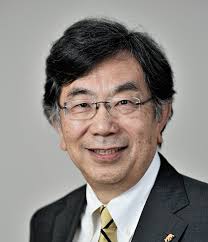
| Autonomous Intelligent and SWARM Control of Robots in Harsh Environment
Prof. Masayoshi Tomizuka Jr. Distinguished Professor of National Academy of Engineering Cheryl and John Neerhout Department of Mechanical Engineering University of California, Berkeley |
 |
Abstract:
Natural disasters are recurring events. In Japan, such disasters occur due to earthquakes, tsunamis, landslides, typhoons, and so on. Current practice of disaster response includes warning by the Meteorological Agency, information dissemination by media (SNS, Internet, TV, Radio…) and rescue operation by Fire and Disaster Management Agency, National Police Agency and Japan Ground Self-Defense Force. Robots have been utilized in many ways such as exploration and searching in spaces too narrow for humans to enter, investigation in lieu of humans in dangerous areas, assessment of damage status, air delivery of foods and medicines by drones, and so on. The usage of robots and drones, however, have not been fully exploited. It is desired to rescue as many victims as possible during the first 72 hours after the occurrence of disaster. The Fukushima Institute for Research, Education and Innovation (commonly known as F-REI) is a special corporation established on April 1, 2023 under the Act on Special Measures for the Reconstruction and Revitalization of Fukushima. Fukushima was hit hard by the Great East Japan Earthquake on March 11, 2011 followed by tsunami and serious damages of the Fukushima Daiichi nuclear disaster. Division 1 (Robotics) of F-REI is engaged in research and development of robots and drones more deployable to a larger set of disasters. Research and development efforts of this unit are directed to 1) collaborative control of synergistic use of UAVs (Unmanned Aerial Vehicles) and UGVs (Unmanned Ground Vehicles) to share roles and respond to various tasks during disasters, 2) collaborative system between UAV/UGV robot groups and humans, and 3) AI technologies to support coordinated control and collaborative systems. Progresses made by principal members of the unit will be reported along with the demonstration planned for the spring of 2026.
Biography:
Masayoshi Tomizuka (Life Fellow, IEEE) was born in Tokyo, Japan, in 1946. He received the B.S. and M.S. degrees in mechanical engineering from Keio University, Tokyo, in 1968 and 1970, respectively, and the Ph.D. degree in mechanical engineering from the Massachusetts Institute of Technology, Cambridge, MA, USA, in 1974.,In 1974, he joined the Faculty of the Department of Mechanical Engineering, University of California at Berkeley, Berkeley, CA, USA, where he is currently the Cheryl and John Neerhout, Jr., Distinguished Professorship Chair and teaches courses in dynamic systems and controls. From 2002 to 2004, he was the Program Director of the Dynamic Systems and Control Program of the Civil and Mechanical Systems Division of NSF. His current research interests include optimal and adaptive control, digital control, signal processing, motion control, and control problems related to robotics, machining, manufacturing, information storage devices, and vehicles.Dr. Tomizuka was the Technical Editor of the ASME Journal of Dynamic Systems, Measurement and Control (J-DSMC) (1988–1993), Editor-in-Chief of IEEE/ASME Transactions on Mechatronics (1997–1999), and an Associate Editor for the Journal of the International Federation of Automatic Control, and Automatica. He was the General Chairman of the 1995 American Control Conference, and was the President of the American Automatic Control Council (1998–1999). He is a Life Fellow of the ASME and a Fellow of the International Federation of Automatic Control (IFAC) and the Society of Manufacturing Engineers. He was the recipient of the Best J-DSMC Best Paper Award (1995 and 2010), DSCD Outstanding Investigator Award (1996), Charles Russ Richards Memorial Award (ASME, 1997), Rufus Oldenburger Medal (ASME, 2002), John R. Ragazzini Award (AACC, 2006), Richard E. Bellman Control Heritage Award (AACC, 2018), Honda Medal (ASME, 2019), and Nathaniel B. Nichols Medal (IFAC, 2020). He is a member of the National Academy of Engineering.
Plenary Speech II
13:10~14:00, Thr., Nov. 6, 2025, International Conference Hall, B1 Level of Engineering Bldg. 5
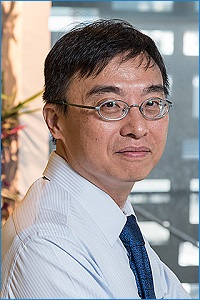
| Brain Computer Interface in Augmented Reality and Metaverse
Prof. Chin-Teng Lin University of Technology Sydney, Australia. |
 |
Abstract:
Brain-Computer Interface (BCI) enhances the capability of a human brain in communicating and interacting with the environment directly. BCI plays an important role in natural cognition, which is to study the brain and behavior at work. Human cognitive functions such as action planning, intention, preference, perception, attention, situational awareness, and decision-making are omnipresent in our daily life activities. BCI has been considered as the disruptive technology for the next-generation human computer interface in wearable computers and devices. In addition, there are many potential real-life impacts of BCI technology in both daily life applications for augmenting human performance, and daily care applications for elder/patients healthcare in real world and virtual world. Talk focus will be the applications of BCI technology on AR-based brain robot interface, BCI-based assistive glasses for the blind, Biofeedback for chronic pain mitigation, and BCI-based human-machine cooperation. The potential applications of BCI in the coming Metaverse will be also introduced in this talk.
Biography:
Chin-Teng Lin received the B.S. degree from the National Chiao-Tung University (NCTU), Taiwan in 1986, and the Master and Ph.D. degree in electrical engineering from Purdue University, West Lafayette, Indiana, U.S.A. in 1989 and 1992, respectively. He is currently a Distinguished Professor, Director of UTS Human-centric AI Center, Co-Director of Australian AI Institute, and Director of CIBCI Lab, FEIT, UTS. He is also invited as the International Faculty of the University of California at San Diego (UCSD) from 2012 to 2020 and Honorary Professorship of University of Nottingham from 2014 to 2021.
Prof. Lin’s research focuses on machine-intelligent systems and brain computer interface, including algorithm development and system design. He has published over 460 journal papers (H-Index 98 based on Google Scholar) and is the co-author of Neural Fuzzy Systems (Prentice-Hall) and author of Neural Fuzzy Control Systems with Structure and Parameter Learning (World Scientific). Dr. Lin served as Editor-in-Chief of IEEE Transactions on Fuzzy Systems from 2011 to 2016 and has served on the Board of Governors of IEEE Circuits and Systems Society, IEEE Systems, Man, and Cybernetics Society, and IEEE Computational Intelligence Society. He is the Chair of the 2022-2023 CIS Awards Committee. Dr. Lin is an IEEE Fellow and received the IEEE Fuzzy Pioneer Award in 2017. He received the UTS Chancellor’s Medal of Research Excellence in 2015.
Plenary Speech III
14:00~14:50, Thr., Nov. 6, 2025, International Conference Hall, B1 Level of Engineering Bldg. 5
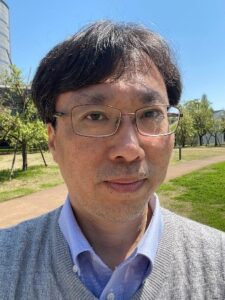
| Topological Intelligence for Human-Robot Interaction Prof. Naoyuki Kubota Professor in the Department of Mechanical Systems Engineering, the Graduate School of Systems Design, Tokyo Metropolitan UniversityDirector of Community-centric Systems Research Center, Tokyo Metropolitan University, Japan. |
 |
Abstract:
Human-robot interaction is one the most important researches in robotics. With the rapid progress of sensing technology, network technology, and machine learning technology, we can realize real-time recognition of human behaviors in human-robot coexisting environments, but we need cyber-physical system integration and analysis. In order to perform multiscale and multiphysics simulations of a real-world phenomenon, we should extract and use topological features and structures from real-time measurement data. Therefore, we proposed the concept of topological twin. The goal of topological twin is to (1) extract topological structures implicitly hidden in the real world, (2) explicitly reproduce them in the cyber world, and (3) simulate and analyze real-world phenomena in the cyber world. Furthermore, we need to deal with inference, learning, search, and prediction based on topological and graphical data as a methodology of topological intelligence. In this talk, we discuss the importance of topological twin in human-robot interaction. Next, we explain various types of topological clustering methods and graph-based methods related to topological intelligence. Next, I show experimental results of topological intelligence for mobility support robots and human support robots. Finally, I discuss the applicability and future directions of topological intelligence in robotics.
Biography:
Naoyuki Kubota is currently a Professor in the Department of Mechanical Systems Engineering, the Graduate School of Systems Design, and Director of Community-centric Systems Research Center, Tokyo Metropolitan University, Japan. He received a doctoral degree from Nagoya University, Japan, in 1997. He joined Osaka Institute of Technology and Fukui University, Japan. He was an Associate Professor from 2005 to 2012, and a Professor from 2012 at the Graduate School of Systems Design, Tokyo Metropolitan University, Japan. He was a Visiting Professor at University of Portsmouth, UK and Seoul National University, and others. His current interests are in the fields of topological mapping, coevolutionary computation, spiking neural networks, robot partners, and informationally structured space. He has published more than 500 refereed journal and conference papers in the above research fields. He was an associate editor of the IEEE Transactions on Fuzzy Systems from 1999 to 2010, the IEEE CIS Intelligent Systems Applications Technical Committee, Robotics Task Force Chair from 2007 to 2014, IEEE Systems, Man, and Cybernetics Society, Japan Chapter Chair from 2018 to 2021, IEEE Transactions on Affective Computing Steering Committee Member since 2019, and others.
Plenary Speech IV
10:45~11:35, Fri., Nov. 7, 2025, International Conference Hall, B1 Level of Engineering Bldg. 5
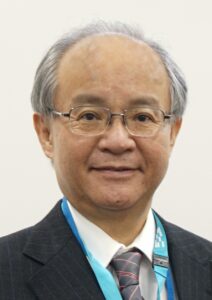
| Humanoid Robotics Research and Its Applications
Prof. Atsuo Takanishi Professor in the Department of Modern Mechanical Engineering Waseda University Director of the Humanoid Robotics Institute, Waseda University, Japan. |
 |
Abstract:
Even though the market size is still small at this moment, one can now easily expect that applications of robots will expand into the first and the third industrial fields as one of the important technologies to support our society in this century. There also raises strong anticipations in the world, like Taiwan, Japan, USA, EU, and other Asian counties mostly facing the declining birthrate problem, that robots especially humanoid robots for the labours, public services and personal uses. On the other hand, humanoids/human-like-robots have been treated as subjects of robotics research in Japan over the last five decades such as, not only industrial uses, but also research tools for human science, entertainment/mental-commit robots or assistants/agents for humans in the living environment and many other cases. Especially the last two decades, manufactures and telecommunication companies started to develop prototypes or even mass production humanoid robots for the purposes mentioned above. From this summer, there started an industry driven organization called KyoHA standing for “Kyoto Humanoid Association” that well known industrial companies join together and develop humanoid related technologies/components/humanoid-robots. In the keynote speech I will introduce our research activities on humanoid robots and their applications such as walking, musical, theatre play, sports, medical-patient-simulator and disaster rescuing purposes, etc. Please see our web page for more detailed information: http://www.takanishi.mech.waseda.ac.jp.
Biography:
ATSUO TAKANISHI is the Department Head and a Professor of the Department of Modern Mechanical Engineering as well as the director of the Humanoid Robotics Institute, Waseda University. He received the B.S.E. degree in 1980, the M.S.E. degree in 1982 and the Ph.D. degree in 1988, all in Mechanical Engineering from Waseda University. His research projects are related to Humanoid Robotics and its applications in medicine and well-being, such as the biped walking/running/baseball-pitcher humanoids, the emotion expression humanoids, the flute/saxophone player and musical conductor humanoids, the ultrasound medical inspection robots, the patient simulation humanoids for airway management training, disaster response humanoids, etc.
He was the former President of the Robotics Society of Japan (RSJ) from 2015 to 2016 and is the Chairman of the Japanese Council of the International Federation for the Promotion of Mechanism and Machine Science (Jc-IFToMM). He is a member of many robotics and medicine related academic societies and governmental committees such as IEEE, RSJ, and the Society of Mastication Systems, the Robot Revolution Initiatives, and a Vice President of the Fukuoka Prefectural Robotics and Advanced System Industry Development Council, etc. He is a fellow of RSJ, the Japanese Society of Mechanical Engineers (JSME) and a senior member of IEEE.
He received the RSJ Best Journal Paper Award (1998), RSJ/JSME ROBOMECH Award (1998), BusinessWeek Best of Asia Award (2001), IROS2003 Best Paper Award –Application (2004), JSME Best Journal Paper Award (2006), ROBIO2007 Best Conference Paper Award (2007), RSJ Advanced Robotics Best Paper Award (2015) and many more domestic and international awards.
Plenary Speech V
11:35~12:25, Fri., Nov. 7, 2025, International Conference Hall, B1 Level of Engineering Bldg. 5
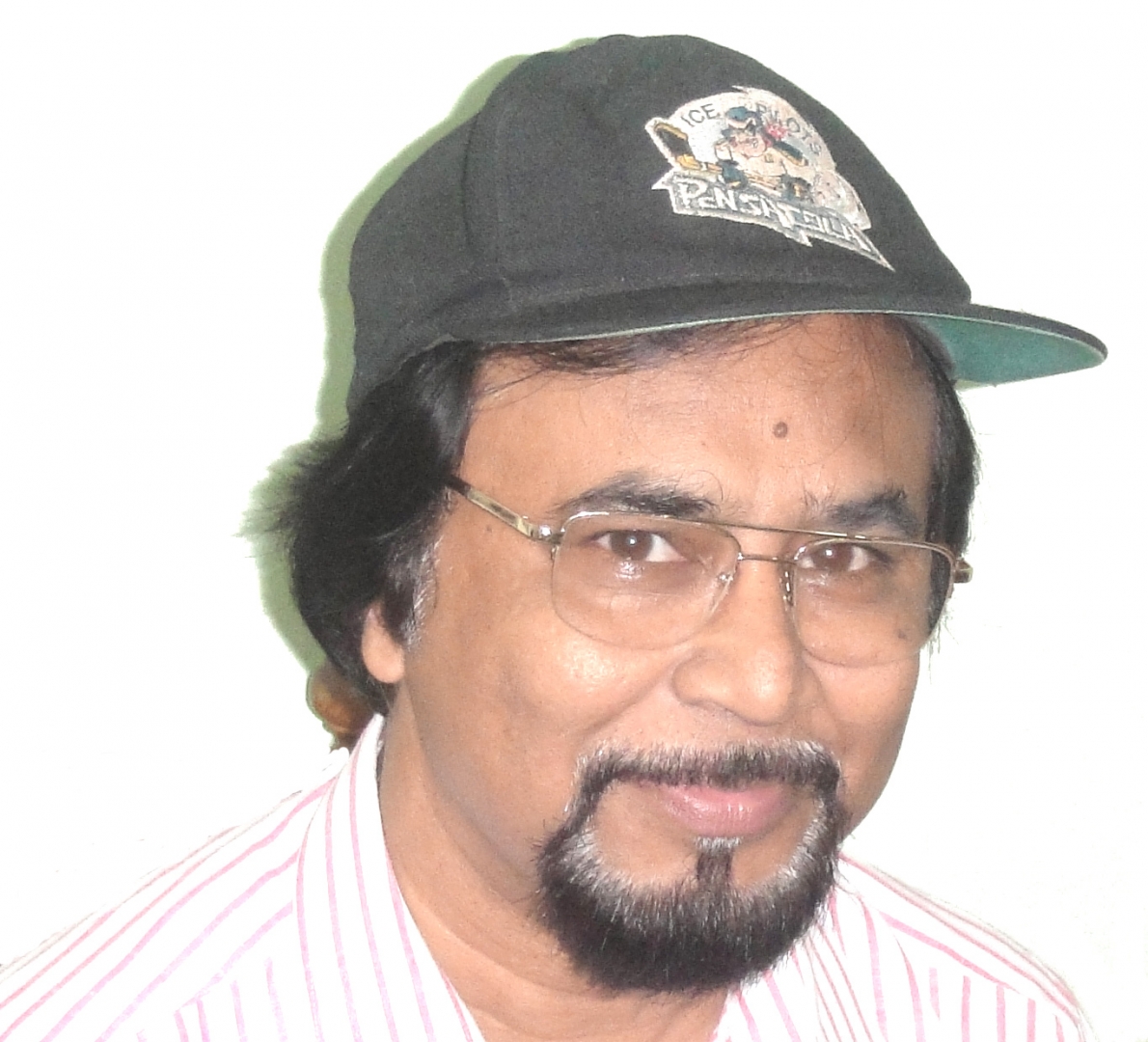
| High Dimensional Fuzzy and Neuro-Fuzzy Systems: Crossing the barrier of 100000 variables!
Prof. Nikhil R. Pal Indian Statistical Institute, Calcutta, India |
 |
Abstract:
In this era of Artificial Intelligence, a very common belief is that deep neural networks and in particular large language models (LLMs) are “all-cure” solutions. It is true that such systems have demonstrated their utility on a wide variety of applications. But they can also miserably fail with very simple reasoning problems. Moreover, all problems are not LLMs, all problems are not big-data problems, and more importantly such systems have issues that prevent them from using in critical applications like healthcare and defence. Among various criticisms of such systems, the more frequently talked ones are lack of interpretability, explainability, and trustworthiness (even in a very narrow sense of the word). Fuzzy rule-based systems as well as neuro-fuzzy systems have some inherent characteristics that can help to realize interpretability of the model, explainability, and trustworthiness. However, two major issues arise as the dimension of the data set increases and these issues severely affect the desirable attributes of fuzzy systems. In fact, designing of fuzzy rule-based systems or Takagi-Sugeno-Kang (TSK)-type neuro-fuzzy systems for high dimensional data becomes difficult due to numerical underflow and the “fake-minimum” problem. In this talk, first we shall present how feature-selection and fuzzy rule extraction can be done for high dimensional data in an integrated manner using the TSK-Neuro-Fuzzy framework avoiding the underflow and fake- minimum problem. Next, we shall discuss how high dimensional fuzzy systems can be designed without reducing the dimension of the data before designing the rule-based system. The proposed system guarantees avoidance of underflow. Not only that, we shall also discuss, how explainability and trustworthiness of the high-dimensional system can be recovered. In this context, we shall demonstrate the effectiveness of the proposed scheme using datasets of dimension more than 100,000 both for classification and regression problems – to the best of our knowledge it is the first attempt to use data of dimension more than 100000 to design fuzzy rule-based systems!
Biography:
Prof. Nikhil R. Pal is an INSA Senior Scientist at the Indian Statistical Institute, Calcutta, India and an Honorary Visiting Professor at the South Asian University, New Delhi. He was a Professor in the Electronics and Communication Sciences Unit and was the founding Head of the Center for Artificial Intelligence and Machine Learning of Indian Statistical Institute. His current research interest includes brain science, computational intelligence, machine learning and data mining. He was the Editor-in-Chief of the IEEE Transactions on Fuzzy Systems for the period January 2005-December 2010. He served/has been serving on the editorial /advisory board/ steering committee of several journals including the International Journal of Approximate Reasoning, Applied Soft Computing, International Journal of Neural Systems, Fuzzy Sets and Systems, IEEE Transactions on Fuzzy Systems and the IEEE Transactions on Cybernetics. He is a recipient of the 2015 IEEE Computational Intelligence Society (CIS) Fuzzy Systems Pioneer Award and 2021 IEEE CIS Meritorious Service Award. He has given many plenary/keynote speeches in different premier international conferences in the area of computational intelligence. He has served as the General Chair, Program Chair, and co-Program chair of several conferences. He has been a Distinguished Lecturer of the IEEE CIS (2010-2012, 2016-2018, 2022-2024) and was a member of the Administrative Committee of the IEEE CIS (2010-2012). He has served as the Vice-President for Publications of the IEEE CIS (2013-2016) and the President of the IEEE CIS (2018-2019). He is a Fellow of the West Bengal Academy of Science and Technology; Institution of Electronics and Tele Communication Engineers; National Academy of Sciences, India; Indian National Academy of Engineering; Indian National Science Academy; International Fuzzy Systems Association (IFSA); The World Academy of Sciences; and a Fellow of the IEEE, USA.
Plenary Speech VI
13:15~14:05, Fri., Nov. 7, 2025, International Conference Hall, B1 Level of Engineering Bldg. 5
| Bridging Semantic Understanding and Robot Execution Prof. Guillem Alenyà Researcher and Director at the Institut de Robotica i Informàtica Industrial (IRI) |
 |
Abstract:
As robotics systems become increasingly integrated into human environments, the demand for flexibility, intuitive programming, and robust human-robot interaction grows. Despite significant progress, a fundamental challenge remains unresolved: bridging the gap between high-level decision-making and low-level execution. This disconnect is particularly critical in interactive scenarios, where a robot’s ability to model its own knowledge and reason about uncertainty is essential for ensuring reliability and trustworthiness.
To address this, robots must not only execute predefined plans but also adapt dynamically to unforeseen events. Ontologies offer a promising framework for explicitly representing abstract concepts and enabling explainable reasoning. Concurrently, the rapid advancement of generative AI models has sparked debate over the role of data-driven approaches in replacing or complementing classical symbolic methods. This talk explores the intersection of these paradigms, arguing for a hybrid approach that leverages the strengths of both to advance the development of socially aware, resilient robotic systems.
Biography:
Guillem Alenyà is Researcher and Director at the Institut de Robotica i Informàtica Industrial (IRI), a joint centre of the Spanish Scientific Research Council (CSIC) and Polytechnic University of Catalonia (UPC). He received a PhD degree (Doctor Europeus) from UPC in 2007 with a work on mobile robot navigation using active contours, which he partly developed at the Robosoft company in France, where he was supported by a EU-FP6 Marie-Curie scholarship. He has been visitor at KIT-Karlsruhe (2007), INRIA-Grenoble (2008) and BRL-Bristol(2016). He has participated in numerous scientific and technological transfer projects involving image understanding, next-best-view, rule learning from human examples and planing execution tasks. His current research is devoted to facilitate the introduction of robots in human environments, principally in the fields of assistive robotics and garment manipulation. He is coordinator of various projects on developing enabling technologies for assistive robotics: ROB-IN about personalization and explainability, CLOE-GRAPH about high-level representation of tasks and explainability (coIP J. Borras), and principal investigator in the SeCuRoPS project, about privacy and safety in HRI, and BURG, about benchmarking and repeteability. He has been coordinator of the SIMBIOTS project on cooperative robots and HuMoUR (on human-to-robot skills transfer, co-IP F. Moreno), and principal investigator of the SOCRATES project (on quality of interaction for social robots).
Plenary Speech VII
11:00~11:50, Sat., Nov. 7, 2025, International Conference Hall, Room 220, 2F of Engineering Bldg. 5
| Fuzzy Logic for Brain-Computer Interfaces
Prof. Dongrui Wu Huazhong University of Science and Technology, Wuhan, China. |
 |
Abstract:
A brain-computer interface (BCI) enables direct communication between the brain and external devices. It can be used to research, enhance or repair human cognitive and sensory-motor functions. Electroencephalograms (EEGs) used in BCIs are weak, easily contaminated by interference and noise, non-stationary for the same subject, and varying across different subjects and sessions. Thus, sophisticated machine learning approaches are needed for accurate and reliable EEG decoding. This talk introduces how fuzzy logic can be used to conveniently extend classification algorithms in EEG-based BCIs to regression.
Biography:
Dongrui Wu (IEEE Fellow) received a B.E in Automatic Control from the University of Science and Technology of China, Hefei, China, in 2003, an M.Eng in Electrical and Computer Engineering from the National University of Singapore in 2006, and a PhD in Electrical Engineering from the University of Southern California, Los Angeles, CA, in 2009. He is now Professor and Deputy Director of the Key Laboratory of the Ministry of Education for Image Processing and Intelligent Control, School of Artificial Intelligence and Automation, Huazhong University of Science and Technology, Wuhan, China.
Prof. Wu’s research interests include brain-computer interface, machine learning, computational intelligence, and affective computing. He has more than 200 publications (15000+ Google Scholar citations; h=65). He received the IEEE Computational Intelligence Society Outstanding PhD Dissertation Award in 2012, the IEEE Transactions on Fuzzy Systems Outstanding Paper Award in 2014, the IEEE Systems, Man and Cybernetics Society Early Career Award in 2017, the USERN Prize in Formal Sciences in 2020, the IEEE Transactions on Neural Systems and Rehabilitation Engineering Best Paper Award in 2021, the Chinese Association of Automation (CAA) Early Career Award in 2021, the Ministry of Education Young Scientist Award in 2022, and First Prize of the CAA Natural Science Award in 2023. His team won National Champion of the China Brain-Computer Interface Competition in four successive years (2021-2024). Prof. Wu is the Editor-in-Chief of IEEE Transactions on Fuzzy Systems.